Macron Convenes Emergency Meeting as 2026 Wildfires Threaten Bordeaux
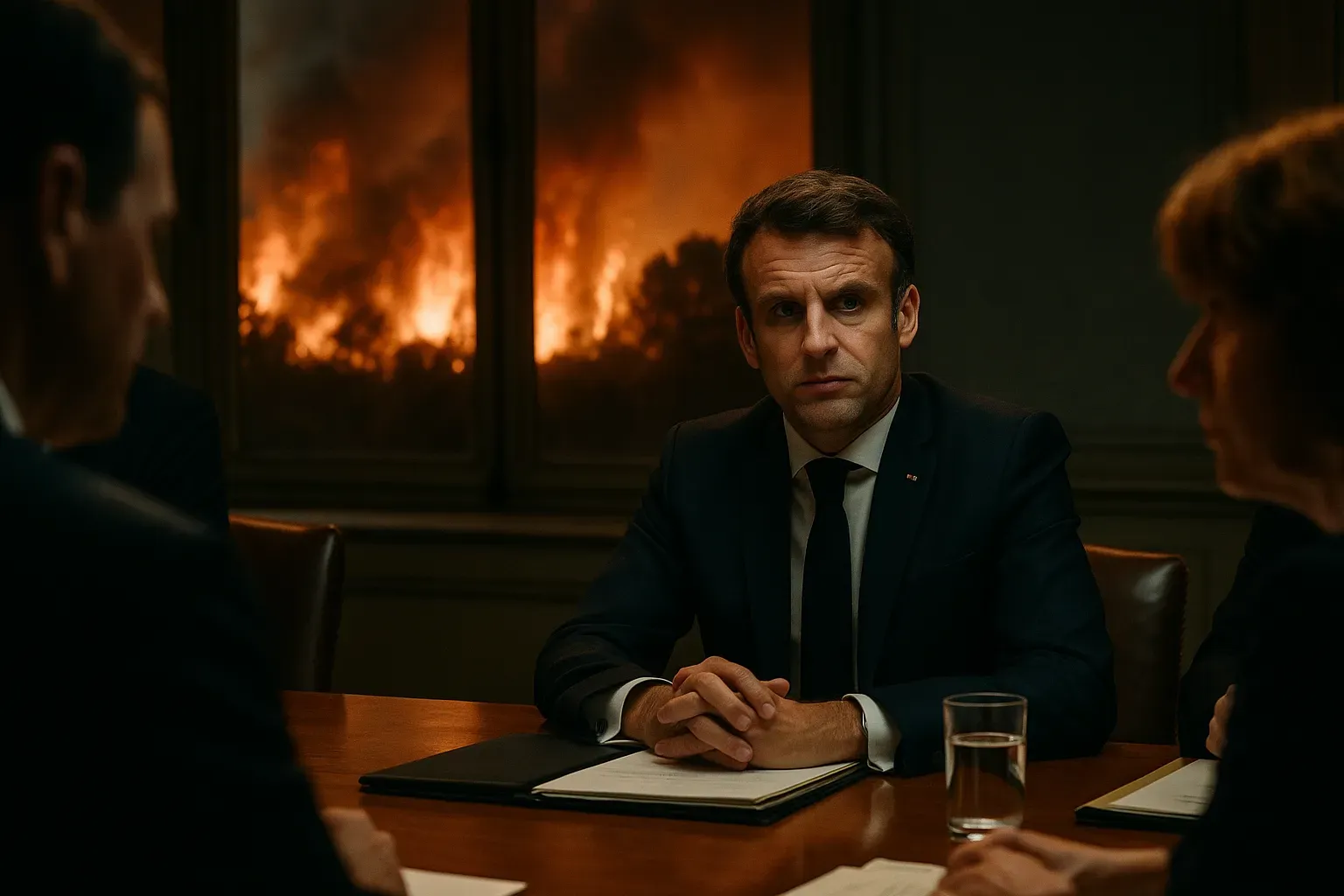
President Emmanuel Macron has urgently called an emergency council meeting as wildfires near Bordeaux. Fueled by a severe heatwave, these fires have torched 42,000 hectares in France so far. A rare pyro-cumulonimbus cloud phenomenon makes firefighting harder. Over 330,000 people in France and Spain have been evacuated.
It’s official. French President Emmanuel Macron has called an emergency cabinet meeting today with wildfires threatening to engulf Bordeaux. The fires, just 15 kilometers from Bordeaux, are spreading fast due to the brutal heat. Mayor Thomas Cazenave says no evacuation plan is active yet. Are we staring at a climate disaster?
Key Highlights:
- 42,000 hectares up in flames in France, a new record since WWII.
- More than 330,000 people evacuated from France and Spain.
- Pyro-cumulonimbus clouds hinder firefighting.
- No immediate evacuation for Bordeaux’s 850,000 residents.
What Is the Current Situation Near Bordeaux?
Right now, wildfires are perilously close to Bordeaux, driven by a scorching heatwave. Mayor Thomas Cazenave confirmed the fires are about 15 kilometers away. Despite the looming danger, he stated there are no current evacuation plans. The decision to delay evacuation is influenced by the unpredictable nature of the firefront, which changes direction rapidly due to shifting winds.
The fires are also complicated by pyro-cumulonimbus clouds, clouds that create storm-like conditions from the blaze itself. Eric Brocardi from the French National Federation of Firefighters pointed out that the firefront is unpredictable, changing directions often and resisting control. It’s a David and Goliath scenario, needing strategic firefighting. These clouds not only hinder aerial firefighting efforts by creating dangerous flying conditions but also intensify the fire’s behavior by generating their own winds, which can spread embers over vast distances.
How Are Officials Responding to the Crisis?
President Macron has taken decisive steps by calling an emergency meeting to tackle the wildfires threatening Bordeaux. He reassured the public that all damaged infrastructure will be rebuilt and long-term support will be available to victims. Macron’s firm resolve underscores a commitment to immediate challenges. The French government has also mobilized thousands of firefighters and tapped into the European Union’s Civil Protection Mechanism to aid in firefighting efforts, showcasing a sense of urgency and cooperation.
Interior Minister Laurent Nuñez called the situation “extremely adverse,” cautioning about the fire’s potential to hit urban areas. Macron’s team is ramping up resources and seeking international help, showing France’s determination to handle this environmental crisis. The deployment of military resources, such as helicopters and drones equipped with thermal imaging, is being considered to efficiently track fire progress and provide real-time data to ground teams. Read more about Macron’s immediate response here.
What Are the Long-Term Effects of These Wildfires?
The consequences of these wildfires are severe, ravaging vast forest areas and causing ecological imbalance. About 42,000 hectares have burned in France, a disaster unmatched since World War II, with serious impacts on biodiversity. The destruction of habitats threatens numerous species, some of which are already endangered, thereby accelerating the risk of extinction.
The financial burden on affected communities is huge. Reconstruction, potential losses in tourism and agriculture, these are big concerns. Massive evacuations, over 220,000 in southwestern France alone, reflect the human toll as people face displacement and livelihood losses. The psychological impacts are also profound, with many experiencing trauma and anxiety about the future. the air quality has deteriorated significantly, posing health risks to residents, particularly those with respiratory conditions.
How Is Neighboring Spain Coping with Similar Challenges?
Spain is also grappling with fires, especially near Valencia, displacing 15,000 residents. Spanish Interior Minister Fernando Grande-Marlaska noted that though the spread is slower, the danger remains. The Spanish firefighting teams are employing innovative methods such as controlled burns to create firebreaks and deploying specialized units trained in managing wildland fires.
Prime Minister Pedro Sánchez, speaking from Ávila, has called for a national pact to tackle climate emergencies. With 77,000 hectares affected in Spain’s largest modern wildfire, urgent climate discussions are needed. The Spanish government is bolstering its response, focusing on containment. They have also launched public awareness campaigns to educate citizens on fire prevention and emergency protocols, aiming to reduce human-caused ignitions, which are a significant factor in wildfire outbreaks.
What Are the Meteorological Challenges Ahead?
The weather forecast isn’t promising. Temperatures could soar to 40 degrees Celsius in parts of France by Tuesday. Such intense heat fuels ongoing fires and complicates firefighting. Meteorologists warn that the persistent high-pressure system responsible for the heatwave shows no signs of abating, which means prolonged dry conditions that exacerbate fire risks.
Firefighters are up against it, trying to guide fires toward natural barriers or waiting for rain to help. The unpredictability of pyro-cumulonimbus clouds adds a new challenge, as these clouds create turbulent weather patterns that can intensify fires. The increased frequency of such weather phenomena highlights the need for improved predictive models to better prepare firefighting teams for sudden changes in fire behavior. These models could potentially leverage AI technology for more accurate forecasts.
See Also:
The Final Verdict
The 2026 wildfires cast a grim shadow on Europe’s environmental future. France and Spain face the daunting task of battling a force that defies control amid record temperatures. The fires emphasize the urgent need for strong climate action and global cooperation to prevent similar devastation. Will these events drive real change in policy and awareness? The impact of these wildfires could potentially serve as a catalyst for a global reconsideration of climate policies, pushing nations to prioritize sustainable practices and invest in resilient infrastructure.
What do you think? Are we ready to handle climate adversities like this?